
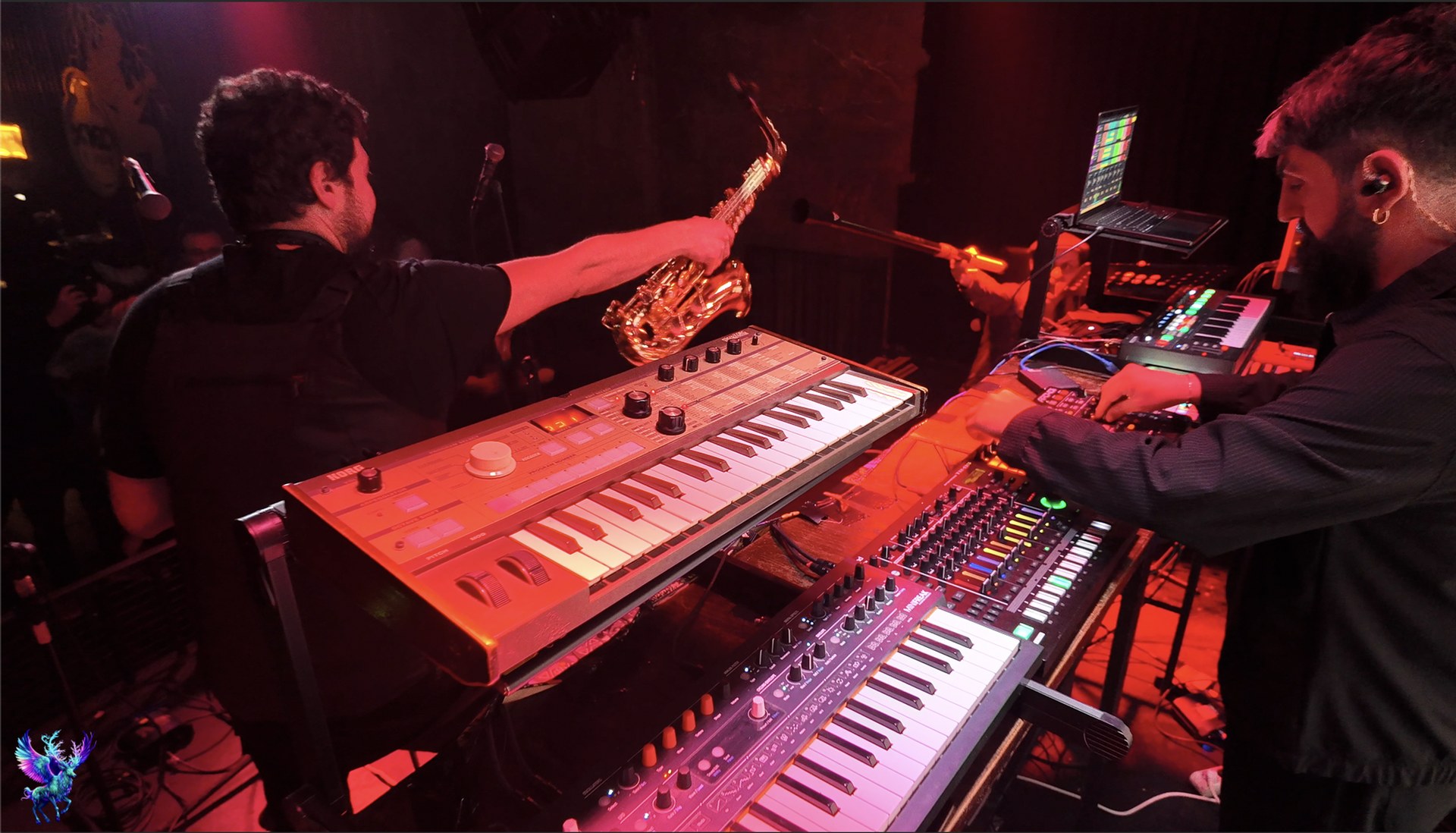
Electronic music is often defined by production tools: synthesizers, drum machines, samples, sequencers, bass design and digital arrangement. Those elements matter, but they do not fully describe what happens on stage. A track can be electronic; a performance can be electronic in a very different way.
PerytoneSound is built around that difference. The project does not treat electronic music only as a fixed playlist or a finished studio object. It approaches the stage as a place where transitions, loops, live layers, organic colors and performance decisions can change the energy in real time.
Electronic music is the field; the live approach is the identity
House, techno, melodic techno, organic house and downtempo all belong to the broader electronic music landscape. PerytoneSound works near the intersection of organic ethnic melodic house & techno, but the important point is not only genre. The identity comes from how the sound is performed.
Instead of using ethnic and organic elements as surface decoration, PerytoneSound places them inside the structure of the performance. They help create tension, atmosphere, release and a distinctive stage memory.
DJ set vs hybrid live electronic act
A DJ set is usually based on selection, timing, mixing and crowd reading. A hybrid live electronic act keeps the club logic, but adds live intervention. Parts of the sound can be opened, muted, layered, looped or reshaped during the performance.
This makes the performance more visual and more responsive. For a promoter, it means the act can work in club environments while still bringing a stronger stage identity than a standard DJ format.
Organic and ethnic textures as musical structure
In many electronic productions, ethnic sounds appear as a short motif or atmosphere. PerytoneSound treats them more structurally. Woodwind colors, Anatolian/global references and live-feeling melodic gestures become part of the emotional architecture of the set.
The result is electronic music that still carries dancefloor energy, but also has an organic narrative. It can sit inside a late-night club program, a rooftop event, an open-air stage or a festival showcase without losing its core identity.
Why this matters for booking
For venues and festivals, booking electronic music is not only about tempo or genre. It is also about what kind of room, atmosphere and memory the act can create. PerytoneSound offers a flexible 60, 90 or 120 minute format that can adapt to club, rooftop, showcase, open-air and special concept settings.
That flexibility is the practical value of the hybrid live approach: it can be programmed as electronic music, but it behaves like a performance with its own visual and musical arc.
Conclusion
PerytoneSound does not position itself against electronic music. It stands inside electronic music and expands the stage language around it. The difference is not a rejection of club culture; it is a more organic, live and emotionally shaped way of presenting electronic sound.